
 21.11.2025
New to Switzerland? Start Here: 7 Things to Know for Expats and Travellers
Switzerland is a country of fascinating contrasts and unique customs, which often surprise newcomers. From peculiar shopping hours to a four-language tapestry of cultures, daily life in Switzerland can differ markedly from what you might be used to elsewhere. Here are seven key things to know about life in Switzerland.
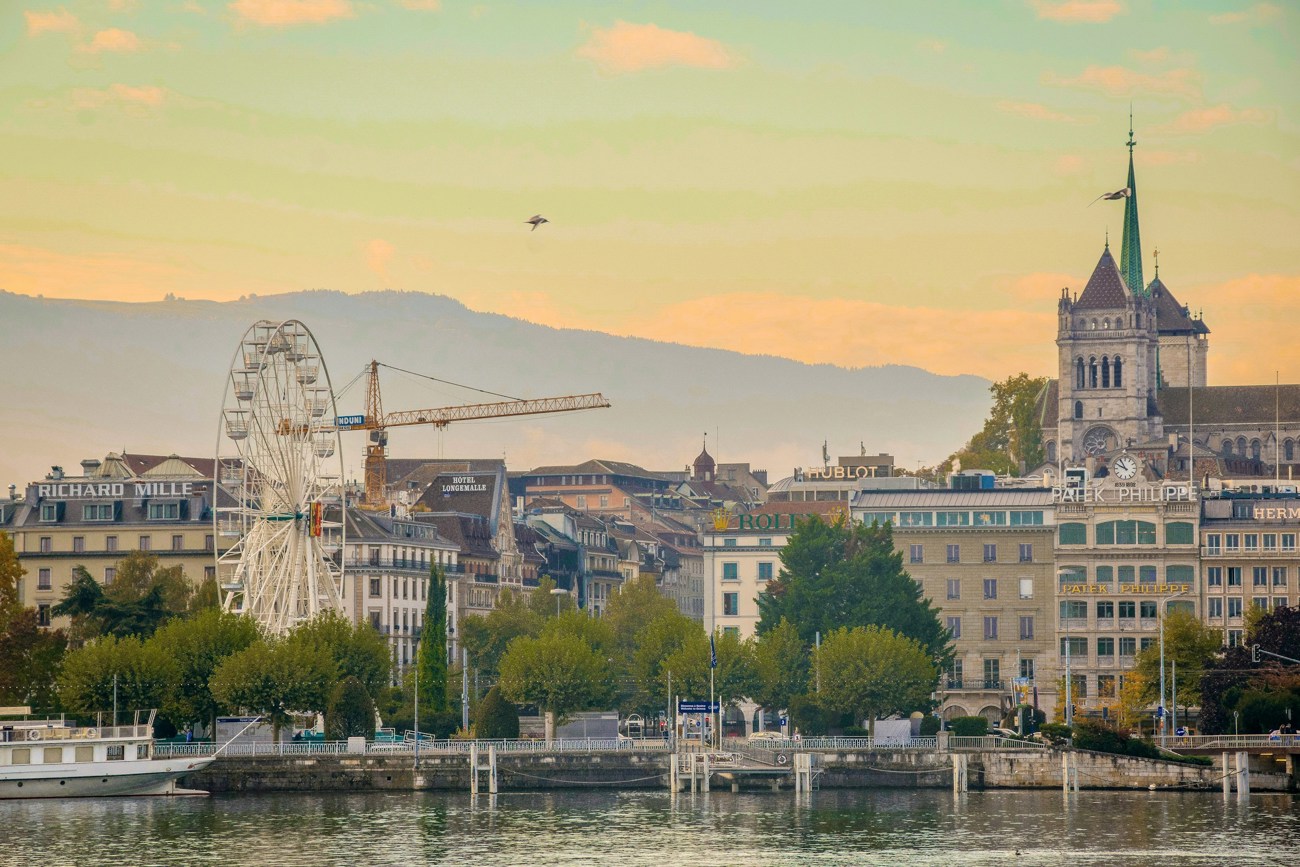
Main image: Geneva. Tom Podmore via Unsplash.com
Opening Hours and Sunday Closures
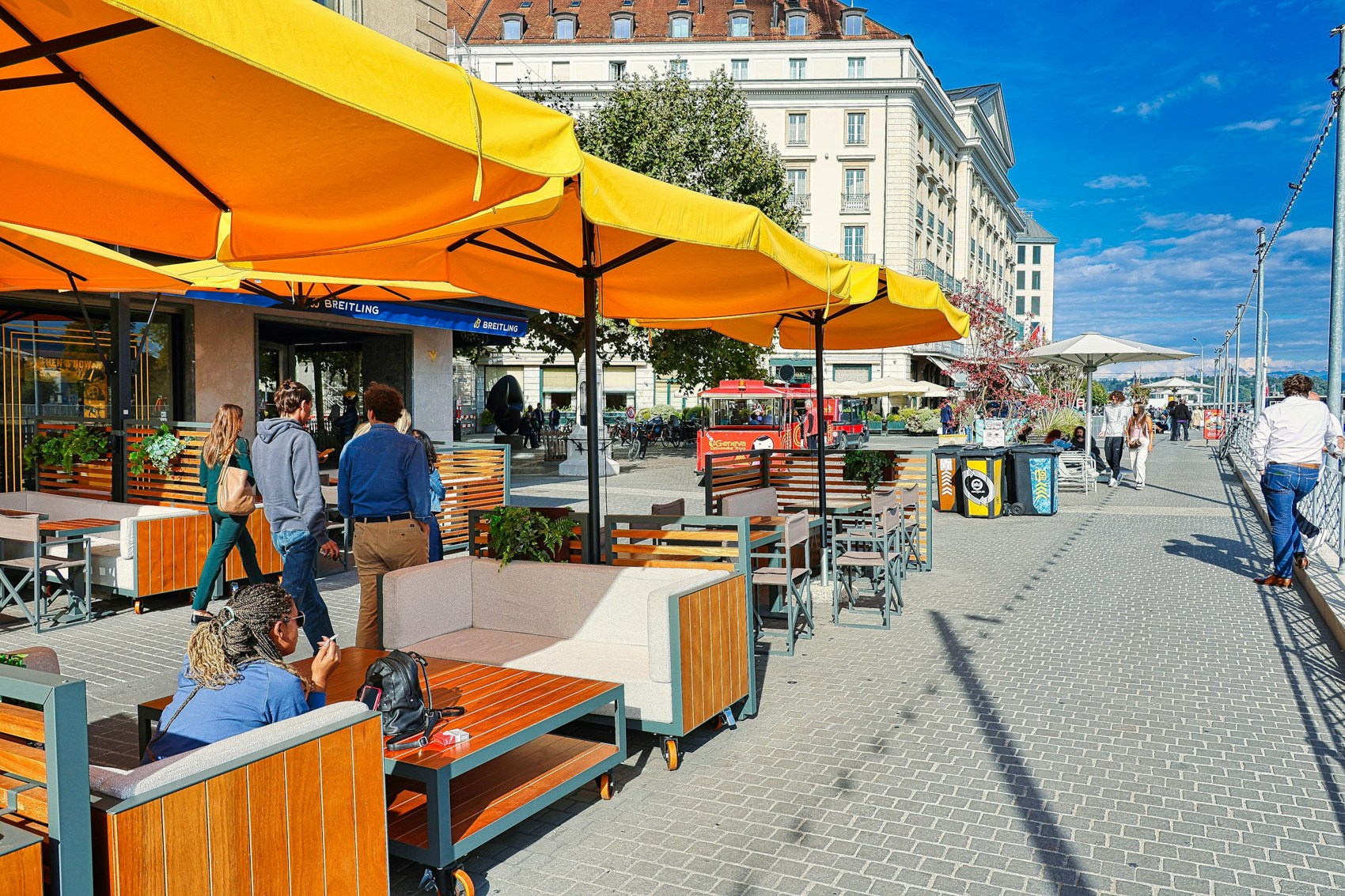
One of the first things foreigners notice is that Swiss shop opening hours are quite restrictive. In many parts of Switzerland, shops close by early evening during weekdays (around 6:00 or 6:30 PM), and most remain closed on Sundays and public holidays. This tradition of limited trading hours is rooted in law and local custom, intended to preserve work-life balance and rest days.
Don’t expect 24/7 shopping – if you need groceries on a Sunday, you’ll have to plan ahead or visit special convenience outlets. There are a few exceptions: major railway stations and airports host shopping centres where certain supermarkets and shops are allowed to open later and on Sundays. For example, Zürich’s main station “ShopVille” mall and many petrol station shops offer extended hours every day. But generally, Swiss retail culture still largely respects Sunday as a day off, so you’ll quickly learn to do your shopping during the week or on Saturday.
 Alain Rouiller via Unsplash.com
Swiss Chocolate: A National Obsession
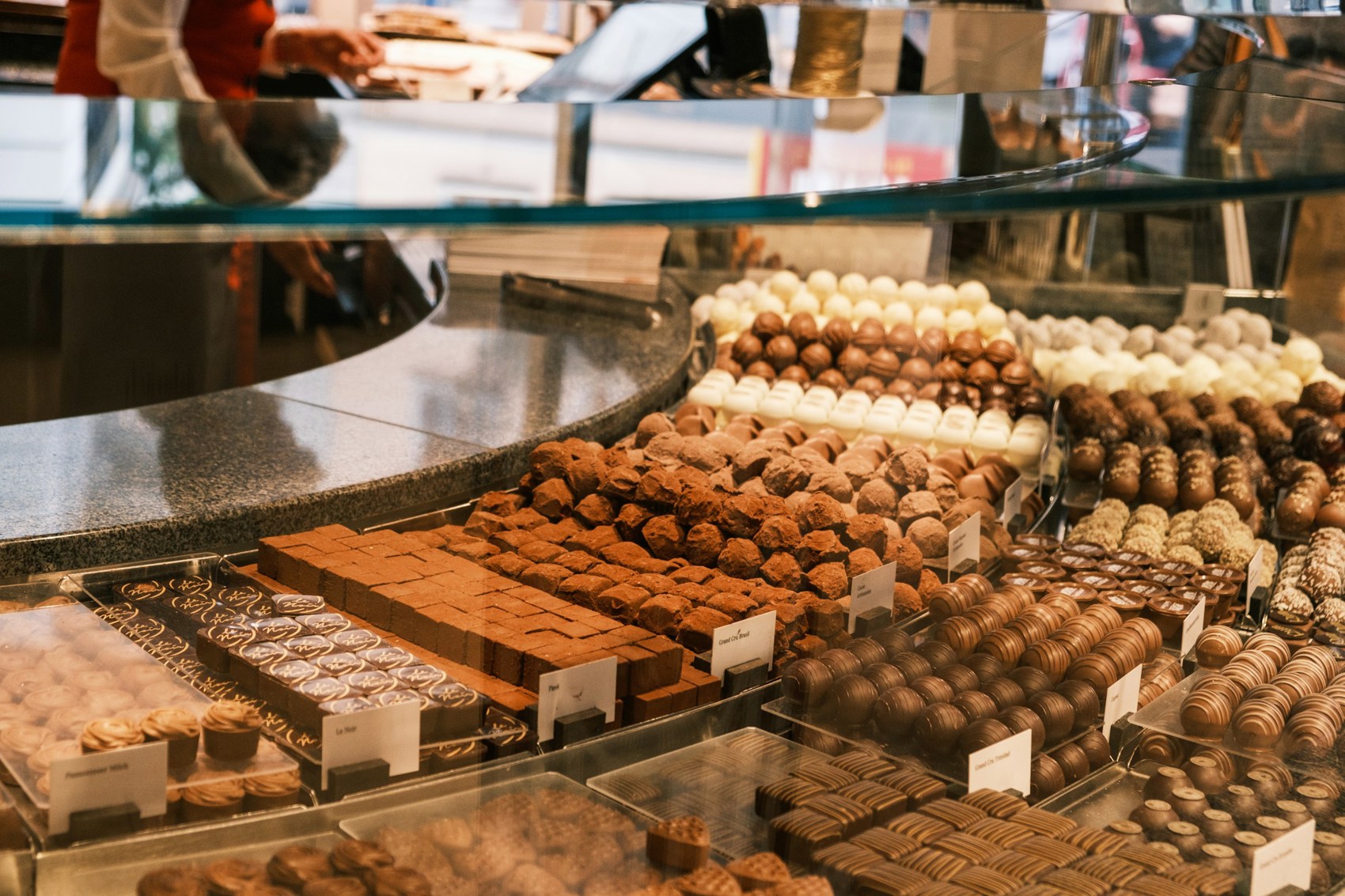
Switzerland’s love affair with chocolate is world-famous, and with good reason. Milk chocolate as we know it was invented in Switzerland – in 1875, Swiss chocolatier Daniel Peter (with help from Henri Nestlé) developed the first solid milk chocolate, marrying cocoa with condensed milk. This innovation launched Switzerland’s chocolate industry and iconic brands like Cailler, Nestlé and Lindt. Another Swiss, Rodolphe Lindt, later invented the conching technique to give chocolate a smooth, melt-in-your-mouth texture. Given this rich heritage, it’s no surprise the Swiss are among the most avid chocolate consumers on the planet. Today, the average Swiss person eats around ten kilograms of chocolate per year – one of the highest per capita consumption rates in the world. Chocolate isn’t just a treat here; it’s part of the culture. You’ll find high-quality Swiss chocolate everywhere, from supermarket shelves to elegant confiseries. Visiting a chocolate factory or tasting local artisanal chocolates is practically a must-do for anyone living in or visiting Switzerland.
 Marquise de Photographie via Unsplash.com
Recycling and Rubbish Rules
Switzerland takes recycling and waste disposal very seriously – so much so that newcomers might be astonished by the strict rules. The country operates on a “polluter pays” principle to encourage recycling. Households are required to sort their waste meticulously: paper and cardboard, glass bottles, metal cans, PET plastic bottles, batteries, organic compost – each type has its own collection point or pickup day. Typically, residents gather recyclable materials and bring them to local recycling centres or designated drop-off bins, often conveniently located at supermarkets or neighbourhood depots.
Crucially, ordinary household rubbish (anything that can’t be recycled) must be disposed of in official paid garbage bags. These bags, sold by municipalities or shops, include a tax in their price – they aren’t cheap. For example, a standard 35-litre trash bag can cost a few francs apiece. Using unofficial bags or tossing out garbage without paying is illegal and can result in fines. This system creates a strong financial incentive to recycle as much as possible (since recycling is usually free) and to minimize what you throw away. The result? Switzerland boasts one of the highest recycling rates in the world, and its streets and countryside stay impressively clean. Just be prepared to learn the local recycling schedule and to stock up on the proper bin bags for your rubbish!
 SHVETS production via Pexels.com
Formal vs. Informal Address (“Sie” vs. “du”)
Swiss people are generally polite and somewhat formal, and this is reflected in their language etiquette. In the main national languages – particularly German and French – there are different forms of addressing someone depending on your relationship. When speaking to someone you don’t know well, someone older, or in a professional context, you use the formal form of “you”: “Sie” in German or “vous” in French (and “Lei” in Italian). Using first names immediately or the informal pronoun can be seen as overly familiar.
As you get better acquainted and develop a friendly relationship, at some point you may be invited to switch to the informal “du” in German or “tu” in French, which corresponds to calling someone by their first name. This process is sometimes called “offering the du” in Swiss German culture – it’s a small milestone of friendliness. Until that invitation happens, it’s safest to stick with formal address. Navigating this linguistic custom can be tricky at first, but it’s an important aspect of showing respect in Swiss society. Don’t worry – your Swiss colleagues or neighbours will understand you’re learning and will usually signal when it’s okay to be less formal.
 Tim Douglas via Pexels.com
Four National Languages in One Country
Unlike most countries its size, Switzerland has not one, but four national languages. This linguistic diversity is a key part of Swiss identity. The four official languages are German, French, Italian, and Romansh. The majority of Swiss (about two-thirds of the population) speak Swiss German as their mother tongue – not the exact High German you learn in textbooks, but a collection of Alemannic dialects unique to each region (for instance, the dialect in Zürich is called Züritüütsch, while Bern has Bärndütsch). In school and media, standard German is used, but in daily life Swiss German dialects rule in the German-speaking areas. The second most common language is French, spoken in western cantons like Geneva, Vaud, Neuchâtel, and parts of Bern – this region is often called “Romandie”. About 20-25% of Swiss speak French natively. In the southern canton of Ticino and some valleys of Graubünden, around 8% of the population speak Italian as their first language. And finally, there’s Romansh, an ancient Rhaeto-Romanic language spoken by a small minority (under 1%) in parts of the southeastern canton of Graubünden. Romansh has semi-official status; the federal government recognises it, but its everyday use is limited to specific areas.
All Swiss children are typically taught at least two of these languages in school, so many people are multilingual. You’ll find that signage, product labels, and official documents often appear in multiple languages. The linguistic landscape can change over just a few miles – for example, if you drive two hours from the German-speaking city of Bern to the French-speaking city of Geneva, you’ll cross from one language region into another. Some towns, like Biel/Bienne or Fribourg, are proudly bilingual. This coexistence of languages requires a lot of cultural compromise and is a point of pride for Switzerland. For newcomers, it means you may need to learn a bit of the local language (or dialect) to fully integrate, but also that English is commonly used as a bridge language in many workplaces due to the multilingual environment.
Not in the European Union, but Closely Linked
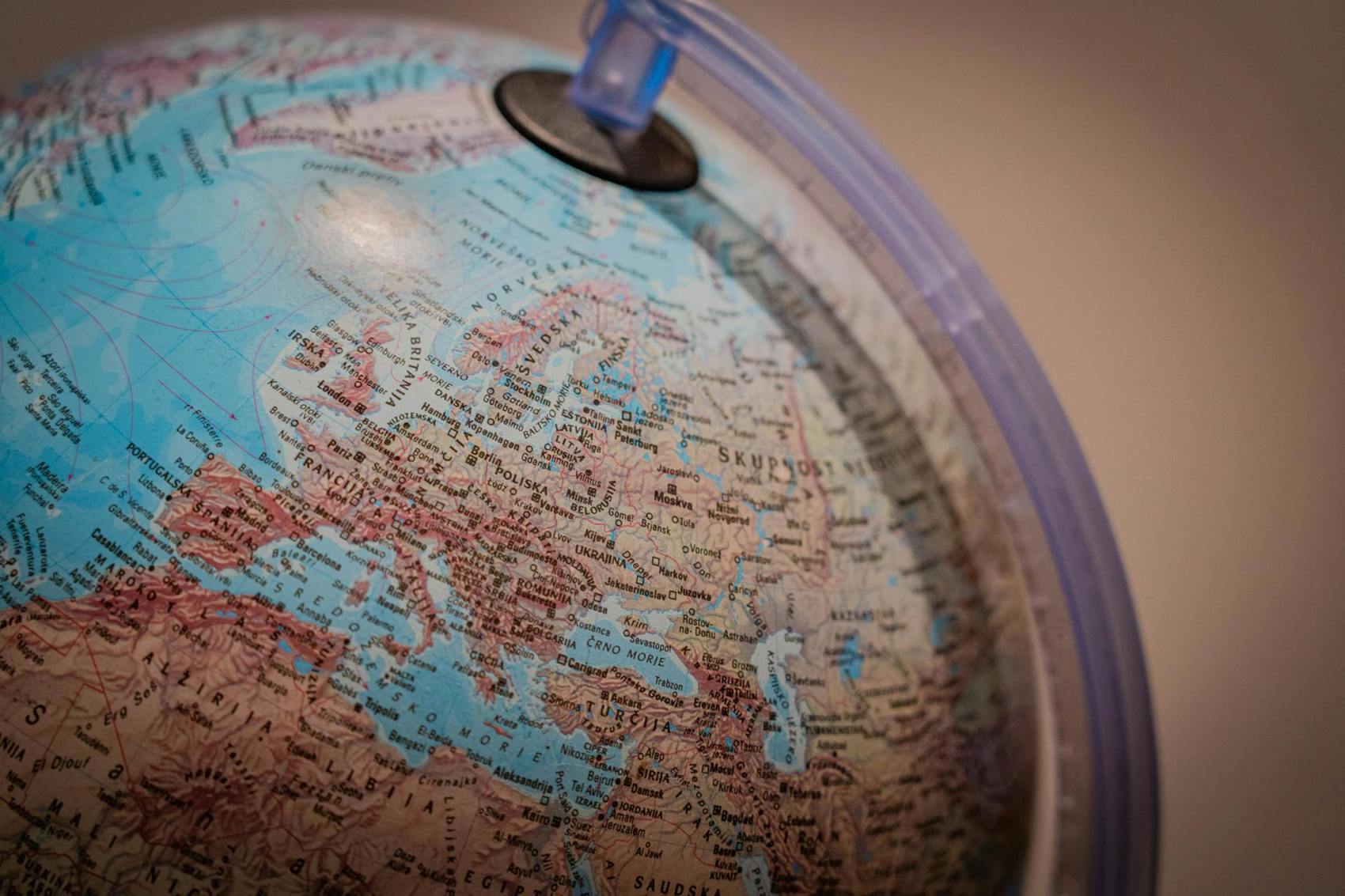
One of the most common questions about Switzerland is its relationship with the European Union. Switzerland is not a member of the EU, and it famously maintains a high degree of political independence. In 1992, Swiss voters narrowly rejected joining the European Economic Area (an agreement that could have been a step toward EU membership). However, this doesn’t mean Switzerland is isolated in Europe – far from it. The country has negotiated a web of bilateral agreements with the EU to facilitate trade, travel, and cooperation.
Most importantly, Switzerland signed up to the Agreement on the Free Movement of Persons, which essentially allows EU nationals to live and work in Switzerland and Swiss nationals to do the same in EU countries. For individuals, this means if you’re from an EU country, moving to Switzerland is usually straightforward in terms of visas and work permits (you still need to register, but it’s a right established by treaty). Switzerland is also part of the Schengen Area, so there are no routine passport checks at its land borders with EU neighbors.
Thanks to these arrangements, Switzerland is highly integrated with Europe’s single market while retaining sovereignty outside the EU. The Swiss participate in various EU programmes and follow many EU regulations by equivalence, but they also occasionally clash with Brussels on issues like immigration quotas or trade rules. The unique model often sparks interest abroad – during the United Kingdom’s Brexit discussions, for example, the “Swiss model” was cited as one possible approach for having close economic ties without full EU membership. In daily life, the impacts of not being in the EU are relatively subtle. You might notice that Swiss prices are higher due to tariffs or that certain product standards differ slightly. You will definitely still use Swiss francs rather than euros. But overall, travel and business between Switzerland and the EU are smooth. Also notable: about 25% of Switzerland’s residents are foreign nationals, mostly from EU countries – a testament to how closely linked Switzerland is with Europe despite standing politically apart.
 Nejc Soklič via Pexels.com
Wilhelm Tell and Swiss Legends
Every country has its legendary figures, and in Switzerland the most iconic folk hero is Wilhelm Tell. You may have heard the tale: in medieval times, as Swiss lore goes, William Tell was a skilled marksman from the canton of Uri who defied an Austrian overlord, Albrecht Gessler. When Tell refused to bow to Gessler’s hat (a symbol of imperial authority), he was punished by being forced to shoot an apple off his own son’s head with a crossbow – a near-impossible feat that Tell miraculously accomplished without harming the child. Afterwards, Tell famously used a second arrow to kill the tyrant Gessler, sparking a rebellion that eventually led to the formation of the Swiss Confederation. It’s a dramatic story that has been immortalised in Friedrich Schiller’s play and Rossini’s opera, and you’ll see Tell’s image in statues and paintings (the Tell Monument in Altdorf, Uri, is a popular sight, depicting him with his son and crossbow).
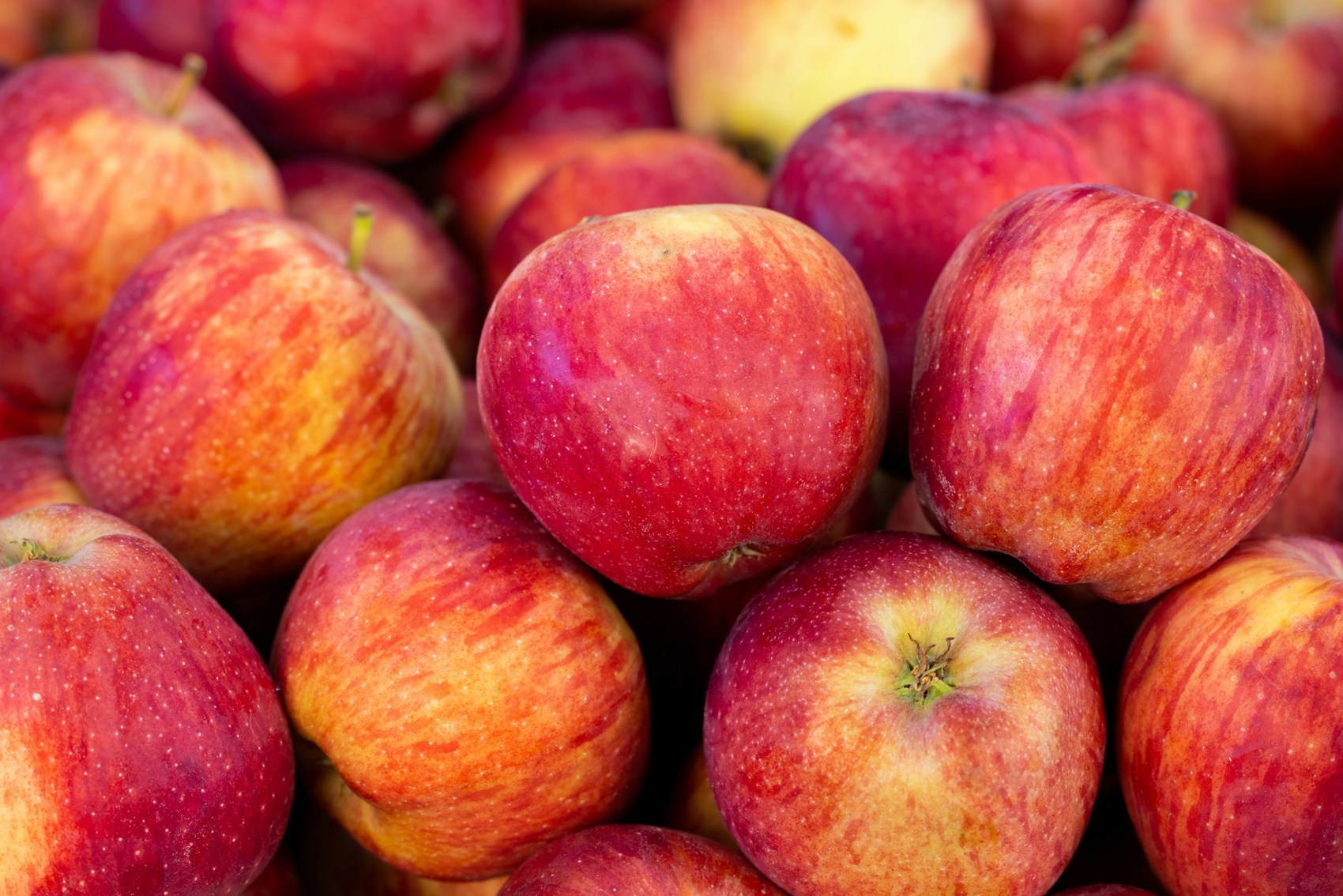
But did it actually happen? Probably not. Historians generally consider the Tell saga a myth or legend rather than a factual history – there are no contemporary records of a William Tell, and similar legends exist in other cultures. The events are said to have occurred in the early 14th century, but they were first written down a few hundred years later, which suggests a folklore origin. Nevertheless, the legend of Wilhelm Tell is hugely important for Swiss national identity. It symbolises the Swiss values of independence, liberty, and resistance against oppression. Schoolchildren learn about Tell as a patriotic figure (with perhaps a wink that it’s legendary). The Rütli Oath of 1291 – another foundational myth where Swiss confederates swore unity on a meadow called Rütli – is likewise a mix of fact and folklore that underpins Switzerland’s origin story. As an expat or visitor, you’ll notice references to Tell everywhere from tourist souvenirs to the names of streets and companies. Even if he never shot that apple, William Tell’s spirit lives on as the embodiment of Swiss freedom.
 Engin Akyurt via Unsplash.com
Podcast episode
For more on these topics, please be sure to listen to this episode of our Living in Switzerland podcast. If there are any other topics you’d like us to cover, please email us at contact@rigby.ch to let us know.
Seven things you always wanted to know about life in Switzerland...
Sources
- Swiss national languages – Swiss Federal Statistical Office
- Zurich German dialect (Züritüütsch) – Wikipedia
- Bernese German dialect (Bärndütsch) – Wikipedia
- Chocolate consumption in Switzerland – Statista
- Chocolate conching and Rodolphe Lindt – Lindt & Sprüngli
- Waste and recycling policy in Switzerland – Federal Office for the Environment
- Jungfraujoch railway and summit – Jungfrau Railways
- Gornergrat railway and summit views – Gornergrat Bahn
- Dufourspitze – Switzerland’s highest peak – Wikipedia
- Swiss public transport passes (GA, SwissPass, Day Cards) – SBB
- Tell Monument in Altdorf – Wikipedia
- Rütli Meadow and Swiss founding myth – Wikipedia
- Tellspiele Interlaken (William Tell theatre) – Official site
- Switzerland–EU institutional framework (up to 2021) – Swiss Federal Department of Foreign Affairs
- Free Movement of Persons agreement (Switzerland–EU) – State Secretariat for Migration
- Foreign population in Switzerland – Swiss Federal Statistical Office
- History of milk chocolate invention – Nestlé Global
- Guide to waste: Keywords A–Z – Federal Office for the Environment (BAFU)
- Bernina Express scenic train – Rhätische Bahn (Rhaetian Railway)
- The William Tell legend and legacy – House of Switzerland