
 Podcast
Watch the video on YouTube
Who We're Talking To
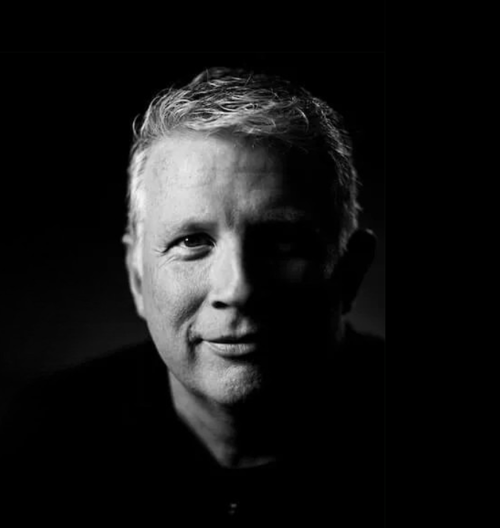
In this episode we speak with Grant Williams - market strategist, longtime newsletter writer, and host of The Grant Williams Podcast. Known for connecting big-picture macro themes with thoughtful, long-form conversations, Grant shares how he’s built a career around curiosity, independent thinking, and asking better questions.
In this wide-ranging conversation, Grant reflects on the routines and systems that keep him productive, how he prepares for interviews, and what he’s learned about staying clear-headed in noisy markets. We also explore how his workflow has evolved over time, the role of reading and writing in sharpening conviction, and why the best insights often come from slowing down and listening. Whether you follow markets closely or just want to learn how a disciplined thinker structures their day, this episode offers a practical, behind-the-scenes look at how Grant works.
Resources
Newsletter - https://www.grant-williams.com/ttmygh_newsletters/
Podcast - https://www.grant-williams.com/grant-williams-podcast/
Grant on X - https://x.com/ttmygh
Next steps
If you got something out of the video then please consider giving it a like, comment and subscribe to our channel. Thank you for listening.
Check out current job opportunities in Switzerland
Send us a spontaneous application
Sign up for our newsletter and receive our Living in Switzerland Welcome ebook guide.
Transcript
Daniel: Hello, and welcome to another episode of The Way I Work. This is a series of podcasts that's brought to you by Rigby. We're a staffing and IT services company based in Zurich. If you or anyone you know of is looking for a role in Switzerland, let us know. The best way to do that is by going to rigby.ch/apply and filling out the form, and we'll let you know as soon as we have anything that might be suitable for you.
We'd be happy to help. As well as Rigby, this series is brought to you by Studiohub, which is a video, photo, and editing studio in downtown Zurich. If you would like to record a podcast for your company, record video or audio, let the team at Studiohub know. You can find them at studiohub.ch.
Alright. Today on The Way I Work, I'm joined by Grant Williams. Grant is someone who's not only spent more than three decades navigating the peaks and pitfalls of global finance, but he's also built one of the most respected voices in the industry through a rare combination of insight, storytelling, and relentless curiosity.
Grant is an investor, interviewer, speaker, broadcaster, and the author of the widely read financial newsletter, Things That Make You Go Hmm. Over the course of 30-plus years, he's lived and worked in several major financial centres, from London and Tokyo to New York and Sydney, giving him a front-row seat to the world's most pivotal economic moments in that time and a global perspective that few can match.
He's contributed hugely, perhaps more than anyone, to the opening up of thoughtful conversations about finance and investing to a much broader audience, and through his documentaries, presentations, and signature essays, whether it's on precious metals, monetary policy, or market madness, Grant has made a career of distilling complexity into clarity and doing it with style.
But today, we're not just here to talk markets. We're here to talk work, how Grant structures his days, how he manages creativity while constantly on the move, what tools and habits he leans on, and how decades of travel have shaped his thinking and routines. We'll also look ahead, how he's approaching the future, and what keeps him sharp in a world that never stops shifting.
Let's dive in So Grant, thank you for joining us. It's a pleasure to speak with you.
Grant: Daniel, thank you for being so patient. We've, we've been trying to do this for ages, and, uh, 100% my fault. It just kept- ... slipping through the cracks. So we're here, and I'm looking forward to chatting with you.
Daniel: Brilliant. Thank you.
So, um, now Grant, so I've been following you for a while, and I've heard... I think I heard you say once that it was through a friend of the family that your interest in markets was first sparked back in the '80s. Would you say that that was kind of a sliding doors moment that set you on the path that you took, or, or do you suspect that you would have followed a similar path anyway?
Grant: Uh, you ask a great question, Daniel. I, I don't know, to be honest with you. Uh, it wasn't as though I remember having... Apart from wanting to play football for England- Yeah ... I don't think I, uh, I had any other great, uh, a great desire to do anything particular at that age. So- Mm-hmm ... you know, in some ways it was a sliding door moment, because it set me on, on that kind of path, but in others, it was, it was just a kind of cute thing that happened to me and made me- Yeah
go, "Oh, that's interesting." You know. So, so I don't know. It's a really good question. I think there were other sliding moment, sliding doors moments in my career that I can, you, that I can see took me down one path as opposed to another. Mm-hmm. Um, but that one, I feel just kind of set me on a path that I've been on randomly ever since.
Daniel: Okay. And you seem to be constantly on the road. Given how much you travel, how do you maintain any sort of routine and, and... or have you learned to thrive without a routine?
Grant: Uh, thrives a bit strong. I've, I've learned to, I've learned to survive without a routine. Um, it, you know, it's funny, uh, uh, the older I get, the more I crave that routine, and so, and I'm, and I'm trying to be better at creating a routine.
It's been really difficult these last, well, really 10, 12 years. I've, I've been constantly on the road, you know. Mm-hmm. I mean, living out of the same suitcase for months at a time, and that's been, that's been difficult. Um, it didn't feel difficult at the time 'cause you just get on with it. You know, I'm, I'm of that generation where you just get on with it, and if you wake up feeling ill or sick or whatever- Yeah
you've got a plane to catch, so you just get on with it. So, um, so I, I definitely think routine is something I need, and I'm, and I'm working hard to kind of create one. It's a, it's a work in progress at the moment, but I'm- Yeah ... I'm, I'm definitely taking steps to try and do it.
Daniel: Mm-hmm. And, and do you have a typical workday, maybe now?
Does it vary a lot?
Grant: Uh, I don't really have a typical workday. I work every day. Um, uh, I don't, I don't have kind of days off, but my... the work will be, um, will, will be consistent. You know, I wake up in the morning and I'll, I'll see what's gone on in the world. Um, I do a lot of reading, which, you know, uh, I consider part of my working.
I read an awful lot. So that, for me, is, is part of what I consider work. Um, and I'll, you know, I'll either be recording a podcast or I'll be thinking about what I'm gonna write for the next month, or making notes or researching or doing something. So I, so, uh, it's very rare a day goes by when I do no work- Mm-hmm
but I don't, I don't sit down and, um, you know, turn everything off from 8:00 in the morning till noon, and then 1:00 PM to 4:00 PM and, and have a structured day like that. I- Right ... I've become pretty good at knowing that when I have to work, I have to work. Mm-hmm. And so everything else needs to, to take second place.
So, um, you know, it's, it's, it's good. It works for me. I, I, I, I struggled at the beginning of kind of working for myself, working from home with- Yeah ... with finding a way to, to do that and make sure that I worked. You know, I toyed with the idea of getting an office- Mm-hmm ... um, just so I had to get up and go somewhere to work.
Right. But, but, but I'm fortunate that my mindset is such that, you know, I've got my... I've got a desk in my living room, and I just sit at it and I can work, and it's not a, it's not a problem. That works. Yeah. As long as I've got some music in the background- Yeah ... I, I can sit for hours and work.
Daniel: And are there any kind of tools, digital or analogue, that are essential for you?
Grant: I mean, look, I'm, I'm talking to you through a microphone and with some headphones on- Yeah ... so I need those for the podcast. Mm-hmm. Um, you know, I need... My office is my computer or my laptop, depending on where I am. Yep. And I don't really need much more than that. Um, I, I just, uh, it, it's a, it's a, it's a fantastic position to be in, needing very little to work, and I could...
As long as I've got internet, uh, I can work from pretty much anywhere.
Daniel: Mm-hmm. Does it sometimes spill into weekends, Grant? And, and if so, are you okay with that?
Grant: Look, it spills into every weekend, and I, uh- Yeah ... and, and I think when you work for yourself, you- Yeah ... you have to be okay with it. You know, that's- Yep
that's... Look, look, I... But at the same time, I could say I'm not working this weekend if I wanted to. Right. You know, the, the choice is mine.
Daniel: Um- Or Wednesday
Grant: afternoon. Yeah, exactly. Exactly. Uh, uh, but I, I, I, I, I know when I have to work, and so I work. And, and, you know, sometimes I'll be up, if I'm writing and I'm on a deadline, I'll sit up and write till 3:00, 4:00 in the morning- Mm-hmm
uh, if I'm in the flow, and it's, you know, the, the... it's all coming together. Yeah. And then I'll go to bed, and I'll wake up at 6:00, and I'll get back and do it again. And there'll be other times when, you know, I might, I might wake up in the morning. Uh, I mean, I try, after I publish on a Sunday, after I publish my note on a Sunday, I try and schedule very little for the Monday, so I have- Yeah
one quasi day off a week. But, uh, it, it, it rarely, rarely ever happens that I do nothing on a Monday.
Daniel: Yeah. A chance to recover a little bit. Now, I think you've addressed this already, partly at least, but, you know, in a corporate setting, there are usually kind of systems and teams in place to ensure accountability and follow-through.
When you're working independently, when you're working for yourself, you, you don't have those built-in checks and balances. So, um, yeah, are there any routines or structures that you've developed to keep yourself accountable, keep yourself on the straight and narrow?
Grant: Well, uh, it's a great question, one, one I've never really given any thought to.
Uh, you know, I, I, I, I am absolutely accountable to myself, you know, and I, and I kinda like it that way. I know if I've not put enough effort in. I know if I'm not working when I should. And, um, and it's that self-accountability that, that makes you say, "Look, come on. You need, you need to... I know you wanna go and watch the football," or, "I know you wanna go down the pub with your mates, but you need to get some work done."
Daniel: Mm.
Grant: Um, and fine if you wanna go to the football, but you know you're gonna be up until 2:00 in the morning- Yeah ... to make up for the time you're giving up. So I think, you know, if you have a, if you have a decent work ethic, and you have a dedication to what it is you do, and you take pride in what you do, so especially when it's the kind of output that I do which is gonna be consumed by other people-
Daniel: Yeah
Grant: You know, if you have pride in that, you're always gonna make sure that, that what you put out is your best effort. And so yeah, I've n- I've never, I've never found myself ever having to try and s- give myself a talking to in the mirror and say, "Look, you know, you're not working hard enough."
Daniel: Mm-hmm.
Grant: If anything, I probably work too much and spend too much time working- Yeah
and not enough time on the kind of, uh, on the other half of the work-life balance if I'm, if I'm honest.
Daniel: Yeah. No, same here. You know, we've been subscribers to Things That Make You Go Hmm since, since the beginning, since you launched it, and, um, it's known for kind of weaving history and markets and storytelling together.
So do you have a certain process that you follow when you're developing a new piece?
Grant: Uh, not really. Not really. I, I, um, over the last... Well, we, I first started publishing in 2009, I think it was. So almost 17 years now. I've, I've been fortunate in that I've managed to cultivate the ability to write about anything that's interesting to me.
Mm-hmm. You know, I, I don't have to find something to write- Yeah ... about the bond market every week, where a lot of people do, or the equity market, or whatever their specialty is.
Daniel: Mm-hmm.
Grant: And it, and if you have that luxury, uh, there's always something that's interesting. There's always something.
Daniel: Mm-hmm.
Grant: And so I, I, my, my process as it is, is, is things will occur to me.
When I, when... I just published, um, my most recent letter last Sunday. So I've got a month now until my next one.
Daniel: Right.
Grant: And I've already read a couple of articles, seen a couple of things that I've kind of put in my little folder for next month as, as things that I might wanna explore and write about. Um, once I, once I know the subject that I'm gonna write about, once I've decided on that, and I will generally decide on that, yeah, any time between two weeks and a week before I actually sit down to write, which will be the, the, the, the week leading up to publication.
The, the first thing I look for is a title. I try and find a title for the piece, 'cause I think, um, once I've got that, once I've got a title-
Daniel: Mm ...
Grant: uh, it, it just... I don't know, but it just, for me personally, it helps me with the flow. It- Yeah ... it gives me a sense of what I'm writing about and the, the, the tone I wanna create.
'Cause I try to be probably too cute with some of my titles. Um, so that's my first thing is, is I, I, I won't start writing until I know what the piece is gonna be called.
Daniel: Mm.
Grant: And then once I do, I'll sit down and I'll, I'll- I'll have a vague outline, but I don't like to have a rigid outline structure because I, I think that, that leaves little room for kind of exploration in between the, the- Yeah
topics you wanna cover. And what I find works better for me is I go off on an exploration. I, I, I wanna dig into a certain topic. I have a sense of what, why I wanna talk about it and, and what I wanna talk about, but I let my research guide me. And so I might go down one road and then find myself off on a tangent for another part that, that I found interesting and perhaps germane to the, the subject I'm talking about.
And then it's a case of, you know, how do you bring it back to-
Daniel: Mm ...
Grant: to the, the, the original, um, ethos behind the piece you started to write. But, um, it's fun. You know, I've tried, I've tried other ways of working. I've tried... You know, people have suggested you should try this, try that. I've tried all kinds of different ways, and this is the one that, that over time definitely works best for me.
Daniel: Okay. And here's one. With the rise of AI, are you experimenting with that in your research or writing processes at, at all, or are you more-
Grant: Yeah. Obviously... Look, I have because people have told me I have to. Yeah. Uh, so I, so I've, I've, I've played around with it. Um, I've found it to be a useful tool, uh, in helping with some of the research.
Yeah. If I wanna know something a little better or, or dig into something, it's been a good starting point-
Daniel: That's it ...
Grant: for that. I've used it as a, as a kind of inline proofreader to make suggestions as to how to improve some of the paragraphs. You know, if I've written a... I'm writing a few paragraphs- Mm ... but suddenly I can't...
It doesn't quite feel like I've landed what I'm trying to say.
Daniel: Yeah.
Grant: I would run it through AI. But generally speaking, um, 99 times out of 100 what I get back just, it just doesn't feel or sound right. Yeah. It's not my voice. It's not the way I would approach something. So for me, I, I, I have not found it particularly useful.
Um, I certainly can't say that I would use it to write because it's, it just... There's no way it's gonna write the same way I would. There's no way it's gonna approach the subjects- Mm-hmm ... the way I approach them. And so, you know, I, I use it as a fairly blunt tool. Yeah. Um, and, and no more really.
Daniel: All right.
You know, you've got such an engaging interview style, and you've interviewed some of the most thoughtful people in investing. Um, are there any interviews or guests that really had a lasting impact on how you approach your own work?
Grant: Oh my God, so many.
Daniel: Yeah.
Grant: So many. I mean, um- You know, I, I, I, I would think with, with my work on my own and my work at Real Vision, I've done well over 500 interviews now, probably-
Daniel: Mm-hmm
Grant: closer to 700 I would think. And, um, you know, it's trite to say I've learned something from each one, but I've learned, in terms of- Yeah ... your question. I mean, I've lear- I've definitely learned something from each one, whether, uh- Mm-hmm ... from an informational perspective. But, um, no, I think, I think, um, I think, I think so many people have, have taught me things, both about, about myself in terms of what works when you're trying to get information out of people or trying to, uh, engage with people.
There are, there are, there are things that work and things that don't. But at the same time, everybody's different. So you- Yeah ... you know, you, you sit in a chair with, with oftentimes a complete stranger, and you have to find a way to build a rapport with them instantly, you know? Mm-hmm. And, uh, and I, and I'd love to say I could, I could give you three or four tricks to do that, but I, but I, I don't know what they are.
Yeah. I, I really don't. Right. I've found that process to be something that I am, uh, equipped to do.
Daniel: Mm-hmm.
Grant: But it's not like I go through a mental checklist. Uh- Yeah ... I, I think the one, the one thing I would say, which is a, which is, I dunno whether it's a, a, a cheat code or I dunno what it is, but, but genuine curiosity-
Daniel: Yes
Grant: about the subject and the person. Yeah. There's no substitute for that. No. There's, there's none. You c- and you can't fake it. I think if you really are curious about that person or the subject you're talking about or the information they have, that goes a long way to- Yeah ... to getting the best kind of, um, responses that you, that, that are possible.
Daniel: Yeah, for sure. And, um, you know, the world today is as noisy and as uncertain as ever, maybe more so. Is there anything that's giving you reason to be optimistic at the moment, either in markets or technology or something else?
Grant: Well, I think, I think you... This, this is, it's interesting because this is the first time in my life where there's a reason to be pessimistic about technology.
You know- Mm ... technology is an, is an incredibly optimistic thing. Yeah. It's incredible. Technology has been the, the source of all human progress. This is the first time in my lifetime-
Daniel: Yeah ...
Grant: that I feel reasons to be pessimistic about technology. And, you know, my reasons are no different to most people's reason.
You know, social media is a, is a, a, you know- It's, uh- ... a, a quickly growing cancer, uh- Mm ... uh, in, in, in, in society. Uh, but there's no reversing it. Um, VAR is another one. We were talking about football before we started recording. Yeah, VAR. And VAR is another one. But, but you know, seriously, the, the, there, there are plenty of parts of the technological piece of our lives today that I am actually pessimistic on, not from a progress perspective, but from the perspective of the effect that it's having on, on individuals and the collective.
Um, but I think, I think the reason to be optimistic is, is the same reason that there was reason to be optimistic at the depths of World War II or the, the depths of World War I- Mm ... is that history will tell you that we will get through this. Yeah. And, and we will figure out the problems and, and, and society will progress, and it will, it will fix the things that are wrong.
It may take time, and right now there's so much chaos that it feels, you know, days feel like weeks. Um, but every time mankind's been challenged in the ways we- we're, we're being challenged now societally, we've worked our way through them. It's not always been pretty. It's often taken longer than one would hope, and it's often involved conflict of some sort.
Daniel: Mm-hmm.
Grant: But, you know, on the other side of that is peace and prosperity and, and, uh, you know, uh, in- increasing, um, increasing benefits for society. We just have to get from here to there. And, and if you're unlucky enough to be around during one of those periods, then, you know, that's just the luck of the draw.
If you were, if you were born in the immediate aftermath of World War II, and you died in 2019, which is a, a human life, you lived through arguably the best period of human history.
Daniel: Yep.
Grant: Um, get those dates slightly wrong, and depending on your age, you know, you're gonna have to go through some turmoil.
That's just, that's just the luck of the draw.
Daniel: Yeah. Grant, have you ever been curious about how someone else approaches their work, their, their, their routines, how they make decisions, how they organize their time? And if so, would you l- most like to hear it in an interview like this one?
Grant: Uh, yeah, look, I, I'm, I'm...
There are plenty of people that I'm curious about their process. So I, you know, I think, I think anybody whose work you admire, you're always curious about how they do what they do. Um, you know, how much of it is a natural gift? How much of it is just hard work and repetition? How do they manage to do the things they do?
I, you know, I, I think I have that, again, that curiosity, there's that word again, about so many people whose work I follow. Um, and you know, I've been, I've been fortunate enough to, to sit and talk with many of them about that. Yeah. You know? I, my, my, my great friend, Remy Tito, who's, um, the man behind The Mad King and now The Citadel.
Daniel: Mm-hmm.
Grant: You know, he is an absolute workhorse. His work ethic is extraordinary, and, and what he gets done in the time when he's working just blows my mind over and over and over and over again. Mm-hmm. You know, I can't work the way he does. He works flat out-
Daniel: Mm ...
Grant: for days and days and days and days on end.
Um, you know, like a mad scientist in a lab, and he loves it. You know? Yeah. He's got such a passion for it, and the results show. So I, you know, I've been spending a lot of time, um, working with Remy in recent months and, uh, you know, he's, he's an extraordinary guy, and his, his process I find, I find fascinating.
As, as would you and your, uh, your viewers if you, uh, if you, if you talk to him.
Daniel: Okay. Perhaps we'll reach out to him. He was behind the camera in the early days in Real Vision, wasn't he?
Grant: No, he wasn't behind the camera. He was, um... He w- he built the platform. Mm-hmm. Uh, he built the website, built the platform, and, uh, he was in charge of all the, the technological side of the platform.
Mm-hmm. Um, and, uh, yeah, I just, just a, just a, a fantastic guy. Fantastic guy.
Daniel: Well, Grant, once again, thank you for joining us. It's been really interesting to speak with you.
Grant: Daniel, it's my great pleasure and I, and I'm sorry, again, it's taken so long for us to get this together. I'm, uh, I'm glad we figured it out in the end.
Daniel: Thank you. Thanks very much, Grant.
Grant: Cheers. Bye-bye.
Daniel: All right. All right, that was another episode of The Way I Work. Thank you for listening. This is brought to you by Rigby. We're a staffing company in Switzerland and in Singapore. If you are looking to hire, either in Switzerland or Singapore, or to be hired, let us know.
The best way to do that is by going to rigby.ch/apply and filling out the form, and then we'll be in touch as soon as we have something that might match to you.
Thank you.